


What to Do if You Come Across a Truck Accident In Alaska: 6 Steps to Take

Commercial trucks are a common sight on Alaska's roadways. According to the American Trucking Association statistics, there are almost 4 million Class 8 large commercial trucks. These trucks transport 11.84 billion tons of freight annually, which is about 72.5% of the nation's freight. Unfortunately, this high traffic volume means those truck collisions are a significant threat to motorists. And with the state's large size and remote location, it's not always easy to get help when needed.
That's why it's important to know what to do if you come across a truck accident while driving through Alaska. This guide will help you take the necessary steps to ensure you know what steps to take if you encounter a truck accident in Alaska. From calling for help to rendering assistance, we've got you covered.
1. Stop And Park In A Safe Distance
While it may be tempting to drive past them, it is important to stop and park your car safely and out of the traffic lanes if the road is blocked.
By doing so, you can help to prevent further accidents and injuries. In addition, you may be able to assist the truck driver or any other accident victims.
But make sure to park your vehicle in a safe manner. If possible, you should move your vehicle out of oncoming traffic and ensure your handbrake is on.
2. Ensure The Area Is Safe
Make sure the accident site is safe before you do anything. This includes turning on your hazard lights and placing flares or cones around your vehicle to increase visibility to other drivers.
And if there's any fuel or hazardous material leakage, keep everyone away from the scene and contact the appropriate authorities.
3. Notify The Police
Call 911 immediately. This, of course, is especially critical if there are injuries or if the accident obstructs traffic.
It's important for you to stay calm despite the situation and call the police right away. Make sure to give the police the exact location of the crash, a description of the vehicles involved, and any injuries you can see.
The police will further investigate the accident and determine what action is necessary.
4. Approach The Truck Only If Necessary
Semi-trucks are large, heavy vehicles that can cause severe damage in the event of an accident. The truck may be carrying hazardous materials. If the truck leaks diesel or you observe other spills emerging from the truck's freight, it could be a dangerous situation.
The truck may also be blocking the road. Approaching the truck could put you in danger of being hit by oncoming traffic.
If possible and safe, try to block off the area with cones or flares to make it easier for the police and ambulance to find the crash site.
The best course of action is to call 911 and wait for emergency services to arrive. Once they are on the scene, they will be able to assess the situation and take the necessary steps to ensure everyone's safety.
That is unless you see someone who needs immediate help. And this brings us to the next step:
5. Render Assistance If It Is Safe To Do So
It is always best to err on the side of caution when it comes to potential injuries. If you come across a crashed semi-truck in Alaska, it is important to assess the situation before taking any action.
If there are no apparent signs of injuries, you may want to wait for emergency responders to arrive before approaching the truck. However, if you see that there are injured people inside the truck, you may want to take action and provide first aid.
But do not try to move any injured person unless this is absolutely necessary because the truck is about to catch fire. Moving an injured person has the potential to turn a minor injury into something severe.
If there are any serious injuries, try to keep the injured person calm and still until help arrives. If you can, move any other people away from the accident scene so they don't get hurt.
Once medical help arrives, they will take over, and you can provide them with any information about the accident.
Always use personal protective equipment, including masks and gloves, if possible. If the truck is on fire, do not attempt to extinguish the flames yourself. Wait for trained personnel to arrive and handle the situation.
Remember, safety is always the top priority. If unsure how to proceed, it is better to wait for professional help than to put yourself or others at risk.
6. Stay At The Scene Of The Accident
In Alaska, it's the law that witnesses who actually saw what happened and what led to the crash must give their names, addresses, and vehicle registration numbers to the police. In addition, witnesses may be asked to give a formal statement to the police about what they saw.
The same is true for a driver whose car was involved in an accident. Leaving the scene in such a situation is a crime in Alaska. The driver could face serious penalties if caught.
And if you have any information about the crash, be sure to share it with the authorities.
Conclusion
In case you find yourself in the unfortunate situation of coming across an accident on the highway in Alaska involving a semi-truck, follow these 6 steps to ensure that you protect yourself and get the help you need.
And if you are in the situation or have any further questions about what to do after a truck accident, don't hesitate to give our team a call. We're here to help.
Heavy Haul Trucking: All You Need to Know About Moving Big Stuff in Alaska
Hauling heavy loads can quickly become problematic. Especially in a state like Alaska.
Even once the truck is on the road with freight, you can still run into last-minute complications, delays, and even routing issues.
Fortunately, the majority of challenges and mistakes can be avoided through proper planning.
And if you’re trying to transport heavy freight, learning all the factors you need to consider can save a load of hassle.
In this guide, we’re going to cover exactly what heavy haul trucking is, why it's important, and what it takes to make it happen:
What is Heavy Haul Trucking?
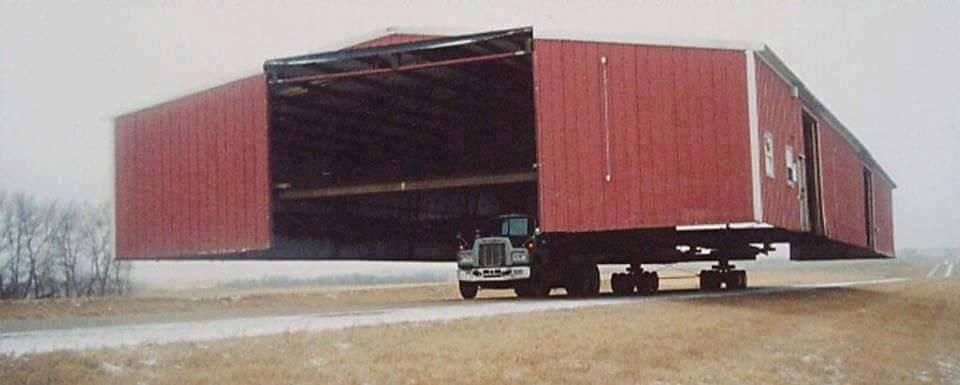
Heavy haul trucking (typically) involves moving anything larger than your everyday shipping container. This might include oversized freight, wide loads, and heavy equipment.
There is even a specialty of heavy hauling that includes unplanned transport and large vehicle recovery like this grader that got stuck in the snow.

Oh, and if you haven't experienced it yet, we always enjoy puzzling out these colossal transportation projects!
(Click on the image to see some more colossal transportation projects across the US!)
Why is Heavy Haul Trucking important to consider in Alaska?
In Alaska, well-planned and executed heavy haul logistics can save a lot of headaches. Whether road conditions become unfavorable and delay delivery of your freight or a sharper-than-expected turn causes damage to your shipment, heavy hauling can become quite problematic.
The problem: between ever-changing road conditions, the geography and topography, the isolated nature of our state, and the industries that make up our economy, heavy hauling can quickly becomes a complicated process.
But planning your heavy haul shipments doesn't have to be this way. Understanding the necessary precautions and requirements for moving your freight can make this a much smoother and more efficient process.
As we stated earlier, most problems can be resolved before a trucking company even starts hauling the load.
So, what are the things you need to consider when route planning? Let's start with the unique challenges that heavy haul truckers face in Alaska:
Road Conditions
This one’s pretty obvious. Driving in Alaska can become a dangerous venture for any vehicle. For trucks carrying oversized shipments, this gets even trickier.
Rapidly changing weather and road conditions only add to the problem.
While we are all familiar with the snow-covered roads and frequent earthquakes, considering their impact is a must.
Traction, bridge clearance, and bridge weight limits (especially with smaller regional earthquakes that damage bridges), can quickly change your route depending on the conditions of a road after a storm or earthquake.
The maintenance of these roads is also a major factor to consider as well. The farther that you get from Anchorage, Fairbanks, and Juneau, the road quality can change very rapidly.
Geography and Topography
Smaller vehicles and smaller roads don't typically need to consider this, but overweight or oversized shipments do.
With heavier loads, the grade of a hill can put more stress on the engine of a truck. In some cases, enough stress to actually keep the truck from making it up the hill.
As for oversized loads, the vehicle could struggle to make corners with trees or cliffs close to the road, which is often the case on many of Alaska's roads.
Isolation
One of the unique challenges that Alaska has to face is how isolated it is in comparison to the rest of the states in the lower 48. This is clear when you consider that driving to and from Alaska requires you to make at least two border crossings.
Not only that but even the cities and towns around Alaska are quite isolated and are sometimes only accessible by boat or plane.
Economy
For trucking companies themselves, it is important to consider the economy of the region it is shipping in. Businesses can also look at their local economy to get an idea of what local trucking companies are proficient in moving and which projects might need more specialized support.
But by considering what oversized and overweight loads are already being transported, you can get a better idea of what is available to you.
Curious about which industries you might want to start looking at?
6 Industries that use Heavy Haul Trucking on a Regular Basis
Below are six major industries that often find themselves using a heavy haul service. Your business might overlap with some of these businesses or be a unique project.
1. Construction
As we move into summer, outdoor construction projects start to become commonplace. Construction equipment suppliers will need to coordinate with project managers on the transport of large machinery which can often involve a trucking company.
And because of the number of construction projects starting in the summer, trucking companies will often find themselves very busy or completely booked through the day while other companies take on the night shift.
Here are some examples of the types of equipment that are transported by trucking companies:
Excavators. In this photo, a heavy haul trucking company called Vulcan Towing & Recovery is using one of its trailers and pilot vehicles to safely transport an excavator to the job site.

Front End Loader. Occasionally, an emergency like an avalanche that buried the Hiland Road in Eagle River requires large equipment to quickly be transported to help local communities.

2. Public Sector
The public sector spans smaller local governments all the way up to the federal government and the size of projects they need often has as big of a range.
For example, the Municipality of Anchorage might use a heavy haul trucking company to move large snowplows or buses. These projects tend to be seasonal like construction or one-off projects for a specific effort being made by a city.
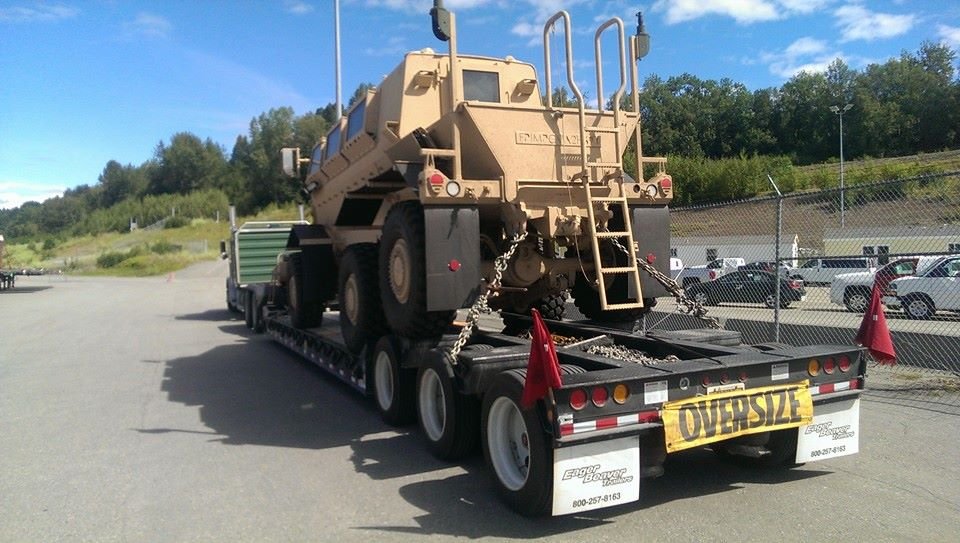
As for the federal government, they can have much larger project requirements. These could include large infrastructure projects for highways or moving large military vehicles.
Examples of public sector transportation projects:
Busses. Heavy haul truckers are able to move large vehicles like a school bus when they need repaired or transported for any reason.

Military Vehicles. Occasionally, large military vehicles can need transport on and off base. The easiest way to do that is with a heavy haul trucking company.
3. Extractive Industries
Natural resource extraction makes up almost 25% of Alaska's economy between oil and gas extraction, mining & quarrying, forestry, and fishing.
Whether transporting the extracted goods themselves like logging trucks or the large equipment that does the extracting, trucking companies are heavily involved in extractive industries.
On the North Slope, getting equipment to the oilfields requires significant logistical effort. Between bulk liquids, materials, and vehicle transport, trucking companies often find themselves busy.
Other businesses like those in the agriculture side of Alaska's economy use oversized vehicle transports to upgrade their farm equipment.
Examples of extractive industry equipment transport:
Mining Equipment. Industries that use a lot of large equipment like the extractive industry require a significant amount of logistical support to transport large vehicles to and from the mining location.

4. Boating Industry
More specifically in our natural resources industry, boat transport is a big deal for a fishing state like Alaska. This isn't limited to commercial vessels either. Larger private boats can use land transport between marinas as well.
The relocation of boats or yachts tends to happen in late spring or early fall once the roads are cleared of snow and preparations begin for the summer season or in preparation for winter.
Land transport for boats can also occur when a water vessel is purchased, whether directly from the manufacturer or privately. Within some limits, you can have a boat transported while you move in or out of the state.
Examples of boat transports:
Boats. Vulcan Towing & Recovery was tasked with getting the Mystic back in the water before weight restrictions changed and the Mr. Big Hook was just the tool for the job.

5. Aviation and Aerospace Industries
This may be surprising, but planes are transported across the land as well! This is more common for planes that are being scrapped or built but still happen.
Examples of aviation and aerospace transports:
Helicopters. Transporting a helicopter by ground can offer significant cost savings and maximize productive flying hours.

Aerospace Logistics. When emergencies happen and aircraft parts are needed quickly, transporting parts safely can become a hassle given the size of the equipment without special transport.

6. Logistics Industry
While I’ve already mentioned planes and boats, trains, big trucks, and buses may also need a haul. Whether broken down or wanting to reduce the potential for damage, heavy haul truckers have served as an option for transporting vehicles in the logistics industry.
Examples of logistics transports:
Semi-trailer Truck. If high winds take an 18-wheeler off the road, recovery is necessary for retrieving the trailer and the semi-truck itself.

What does it take to prepare for your heavy haul loads?
Now that we have looked through some of the industries that use heavy haul transports, let's dig into what to consider when preparing for moving your freight.
A good place to start is the what, where, when, and how questions.
What are you moving?
This is one of the first questions that you will receive when you reach out to the company transporting your freight.
Are you moving one big item or a lot of small items? Is it liquid or solid? What size is this item?
The dimension question is one of the big decision-making factors when it comes to route planning and the trailer to use during transport.
The height of an object will affect which bridges and tunnels a vehicle can use. Turns, roads, and the use of escort or pilot vehicles will determine the width.
Then, to decide which trailer, the length and weight are important to consider.
For example, a short, 80,000 lb truck crossing a bridge will have weight concentrated on a smaller area that could cause potential damage. A long, 80,000 lb truck would have its weight distributed better across the bridge and have less risk for damage.
Lastly, when communicating details about your freight to the trucking company, be sure to add any special requirements.
How does temperature affect your freight? Would rain, snow, or other weather cause significant damage? Is your freight particularly delicate or flammable?
When telling the trucking company what you are transporting, the dimensions, weight, and special requirements, specificity is key in order for the heavy haul truckers to follow legal requirements.
Where are you moving it?
This is one of the more straightforward questions, but some details are often forgotten.
It's obvious that we'll need to know where to pick it up and where to take it, but it’s the places in between that can be the tricky part.
This is where a heavy haul expert can come in handy. They will ask questions like, will the freight be going through many cities? Counties or municipalities? States? Countries?
Each of these location categories can have their own requirements and restrictions. Some long, complex routes will need the truck to avoid entire areas entirely to not break local laws.
On rare occasions, freight will even need to be transferred from one trailer type to another to stay within regulation.
Additionally, you and the transport company will need to apply for some permits to move your goods through regions. The number of these permits will change based on where your freight travels.
When do you need it to arrive?
Another seemingly obvious question. When does your freight need to get to its destination?
What comes next is the wave of preparatory logistical questions to make sure unexpected delays don't impact your business.
Some important questions to consider are, when will the freight be ready for transport? Have you left extra time for unexpected shipping delays?
Answering these questions will give your transport team a better idea of the available timeline for transporting your freight.
How will it get there?
This stage of questioning will likely have an answer before this point, but it is still important to check regardless.
The logistics industry is vast and complex, but can simplify into a few major categories: Land, Sea, and Air.
Each have their own limitations and benefits, so they are each important to at least consider. Between Alaska and the Lower 48, the majority of cargo comes into Alaska by ship and could provide a cheaper option.
Transporting freight by air is more frequent, but often more expensive than by ship.
The benefits of heavy haul trucking provide flexible service that can do door-to-door service unlike planes, boats, and trains.
But, an option to consider are always multimodal solutions that use more than one form of transport.
So, now the next question is...
How does one make it all happen?
Once you understand heavy haul trucking, you can start to plan ahead and prepare better for transporting your freight. But, the question of who will do the move itself remains. You could take it any one of these three directions:
Assign the move to existing internal teams. If you have an existing team of heavy haul truckers, congratulations! You can hand the project off to your internal team and coordinate with them directly.
Buy equipment and hire an internal team. If you are planning on moving lots of oversized or overweight freight consistently, investing in an internal team might be a wise decision for your business.
Contract a heavy haul logistics company. For those that have one-off projects, or investing in an internal team isn't workable, hiring experts could be the answer. An expert trucking company can help plan and prepare transport for your freight, and then collaborate with you on executing the plan.
If you don't have a shipping department or can't afford the million-dollar equipment -- that's where we come in as your contracting heavy haul company. 😉
Whatever you choose, when executed effectively, heavy haul trucking will become a valuable resource for your business—and save you a lot of headaches in the long run.
Improper planning can lead to a lot of wasted time and money for businesses looking to transport large freight, but clear and timely communication can decrease transport times, decrease costs, and directly contribute to the growth of your business.
Take the time to properly plan and prepare for your heavy haul projects. You’ll be glad you did.